
COURSE DESCRIPTION
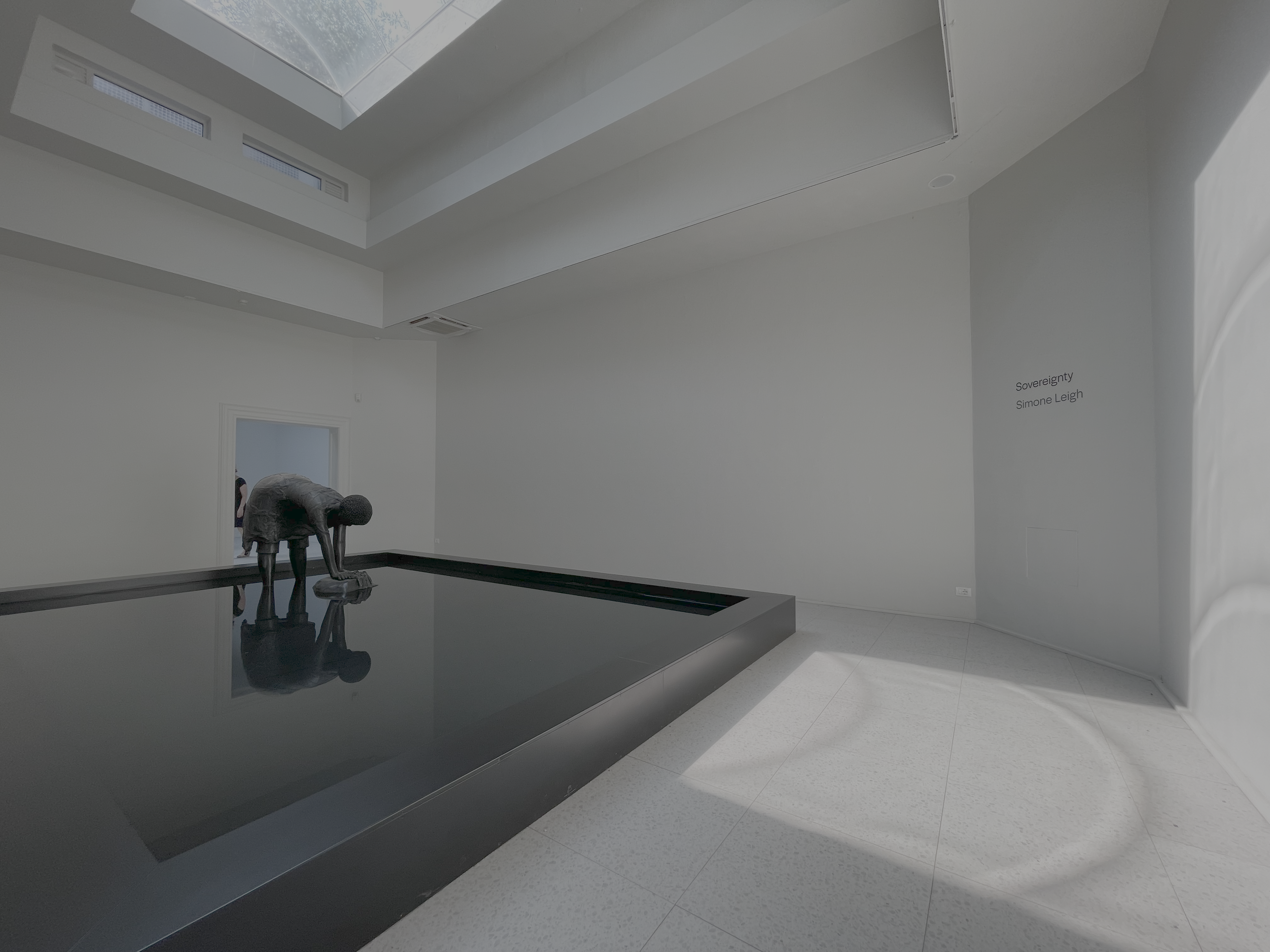
The recent onslaughts of reproductive rights, and the rights of trans and gender non-conforming people, have irrevocably crushed our illusions of a taken-for-granted sovereignty over our own bodies. In this class, we will examine contemporary art practices from Africa and the African diaspora that explore a radical feminist self-possession, which cannot be reduced to claims of ownership, domination, and control. Interrogating how Black feminist artists have responded to the refused recognition of institutions as museum and art galleries, we will trace the ever-expanding significance of immaterial, performative, and ephemeral artworks through the twenty first century.
INTELLECTUAL RATIONALE
This class aims to illuminate how Black Feminist Art Practices bridge the gap between art and life, and far from merely resisting or rebelling against forms of oppression shed light on expressions of freedom and acts of radical self-possession. In the first of the course's three sections, “Blackness and Being,” we will take as a point of departure Christina Sharpe’s questions about what will happen if instead of demanding justice we recognize (or at least consider) that the very notion of justice is predicated Black exclusion and death? Through Sharpe's conceptualization of the wake, and Fred Moten’s critique of how antiblackness and its mere denunciation depend on the “supremacy of a certain mode of intelligence,” we will explore reparative tactics for dying ungrievable deaths and living lives meant to be unlivable. In a second section, drawing largely from Sylvia Wynter ideas of being human as practice, we will focus on how spirituality, materiality, and expressivity, may allow us to think performance and recognition anew.
In the course's final section, “Suffering and Spectacle” we will examine the key role that the circulation and consumption of images of Black people suffering has played in the production and sustain of a white neoliberal fantasy of a world where death and decay have been always displaced to a distant or neighboring other. Within this framework, we will also examine what makes art Black, and how desire (often imagined as neutral and fundamental to the subject’s existence) often obscures its complicity with racialization.
WAYS OF KNOWING REQUIREMENT: VISUAL AND PERFORMING ART
The course explores the emergence and expansion of Black Feminist art practices through the twentieth and twenty-first centuries, with a particular focus on contemporary artists working in the US, such as Wangechi Mutu, Simone Leigh, David Hammond, Carrie Mae Weems, Lorna Simpson, and Adrien Piper. That said, we will also take into consideration deep analyses of a wide range of media, as the film "I am not a Witch" by Rungano Nyoni; the photographs of Elizabeth Eckford outside Little Rock's Central High in September of 1957; music videos by Kendrick Lamar, Flying Lotus, and M.I.A, manifestos as that of The Combahee River Collective, and various space interventions, performances and ritual practices that have remained at the margins of museums and art galleries.
I am thrilled that this semester we will have limited access to screen "Will I still carry water when I am a dead woman?" by Wura Ogunji, performed in the streets of Lagos in 2013 with Taiwo Aiyedogbon, Ruby Amanze, Deola Gold , Wura-Natasha Ogunji, Odun Orimolade, Mary Oruoghor, Wana Udobang.
Additionally, I am hoping we will be able to host High Priestess Talabi Adedoyin Olosun Faniyi to give a lecture about the Osun Groves in Osogbo, Nigeria.
While this a 100 level class, we will explore the nuanced narratives Black Feminist art practices articulate through the lens of the core analytical framework of Black Feminism and Black Studies.
Readings include authors as Christina Sharpe, Fred Moten, Alexander Weheliye, Elizabeth Alexander, Jacqui Alexander, Saidiya Hartman, Sylvia Wynter, Zadie Smith, and Jamila Muser— among many others. This course surveys works of contemporary art and visual culture that are rooted in the aesthetic and epistemological languages of Africa and the Black Atlantic, challenging the majoritarian and normative interpretative lens from the main cultures of the United States or Western Europe.